A post script on supporting farmers

Given that I’m reading Wendell Berry’s arguments for appropriately supporting the people who grow our food, I was sad to read this today over at the Youth Food Movement blog:

The Australian Farm Institute released research that found only 28% of Victorian farms made enough profit to support their own families. That’s crazy!

Its even scarier when put like this: 72% of Australian family farms don’t earn enough to support the family on them.

The piece I was quoting yesterday was written in the 80s. How sad that twenty years later it’s still so appropriate an argument.

~

Read the full YFM post here.
Unfortunately, access to the full study by the Australian Farm Institute requires a paid membership, but you can read a detailed report on it here.

Food reading: Agricultural Solutions for Agricultural Problems

I couldn’t resist another quote from Wendell Berry:

“In nature death and decay are as necessary—are, one might almost say, as lively—as life; and so nothing is wasted. There really is no such thing, then, as natural production; in nature there is only reproduction.” (from Agricultural Solutions for Agricultural Problems, 1978)

Indeed.

~

This essay is from a collection of Berry’s work, entitled Bringing it to the Table: On Farming and Food, which is available on Amazon here. (Full disclosure: I’ve got an affiliate account with them, which means I’ll make a small commission if you purchase the book through that link.)

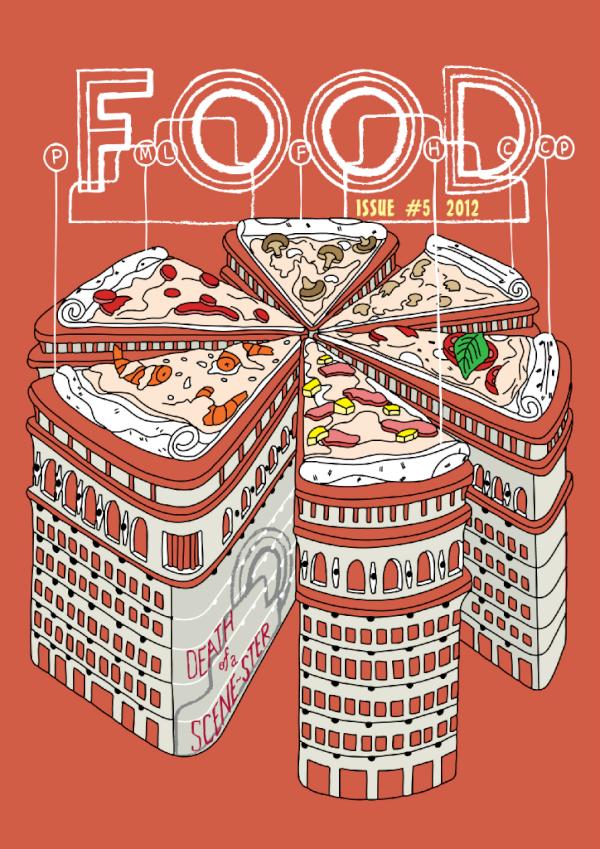
My words in Death of a Scenester

Melbourne ‘zournal’, Death of a Scenester is launching its fifth issue, Food, next Saturday night in Abbotsford in Melbourne. Some words of mine on growing my own food and the subtleties of vegetarianism will appear in this issue.

Unfortunately I can’t make it to the launch, but if you’re in Melbourne, do try and get along! I’m really looking forward to getting my hands on a copy of this issue.

Adventure

Looking back over the last few posts here, I’ve realised that I seem to spend an awful lot of time writing here about not doing things. Or at least about needing to do nothing because I manage to keep myself busy and occasionally need a rest. But I rarely write about the things that I actually am doing.

So I thought today I would write about something that I’ve actually done. Today I went adventuring with a friend — a kind of research project for both of us. We caught the bus from Newtown to Coogee with no real plans, except to look around and maybe find somewhere we could eat pancakes. We wandered along the beach, in the rain, and took pictures of sand, boats, trees. We found a cafe in which to eat pancakes (yum!), and we wandered around a local green grocer without shopping baskets, trying to resist the temptation to buy any food. We walked up hills into the residential streets, gazing at all the interesting houses and interesting gardens.

We talked a lot, and I got damp toes. And we took pictures. Here are some of mine.

A little bit of nepotism…

My brother Tom is nearly finished a Captain Planet degree — that is, a Bachelor of Interdisciplinary Studies in Sustainability. As part of the degree, he’s pulling together what’s called a Sustainable Marketing Project, with a particular focus on a post- or low-carbon future. Because he’s just as much of a food nut (pun intended) as I am, he’ll be looking specifically at food.

It’s interesting, I think, that the two of us have both come to be writing and thinking about food, and that we’ve come at it from such different educational backgrounds (at least on a tertiary level). A large part of Tom’s degree has been necessarily science-based; I, however, have not studied any science since the hopefully-named ‘Physics is Fun’ semester I did at the end of year ten. My background is in arts and communications.

And I guess that’s why I’m particularly interested in this project. I think it’s safe to say that I’m obsessed with food; eating it, yes, but also thinking about where it comes from and how it gets to be on my plate. These questions are sometimes questions about process, and they’re sometimes questions about ethics. Tom’s project is attempting to cover both: how carbon is embedded in our food, and how to calculate that, but also why knowing that is important or relevant. This project is about information, but it’s also about telling a story.

The marketing element to this project, I think, is what makes it so interesting. Information about this thing we call ‘sustainability’ (what does that word even mean anymore?) is so often tinged with negativity, or completely overwhelming because of its sheer volume. It’s something I certainly struggle with in my non-fiction writing on food. The story-telling element is so important to get right, or you lose your reader (or viewer or listener) after about half a second.

Have a look at Tom’s first few posts on this project here. He’s just getting started, and I’m sure he’d really appreciate some feedback. I can’t wait to see what he comes up with.

Your Words Can Change the World

As part of my research into urban agriculture, I’ve just stumbled across The Lexicon of Sustainability. Lots of fascinating people doing a huge variety of different and interesting things to find and produce food.

This is their ‘About’ video. And the last sentence really struck me: “Your words can change the world.”

Introducing … The Lexicon of Sustainability from the lexicon of sustainability on Vimeo.

The idea is to try and explain some of the terms we see bandied around — ‘sustainbility’, ‘organic’, ‘locavore’ — in a way that’s accessible, and lovely to look at. I have to say that I’ve often found that this kind of information is not presented in a way that makes you want to keep looking at it. Which I’ve always thought is counter-productive. The Lexicon, however, manage to be informative and beautiful at the same time.

Take a better look here.

I have a feeling I might end up playing around here for hours…

~

PS. I found this through Milkwood‘s blog. They’re a small organic farm just near Mudgee, who also run a permaculture education, design and consultancy firm. I’d love to visit them sometime soon.

Gardening

I never thought I’d be a gardener.

The house I grew up in had an enormous front and back yard, and my brothers and I spent many hours playing in the garden, making cubby-houses out of bushes and soup out of mud and berries. A trip to the local nursery on a weekend with Mum and Dad was a fairly regular occurrence. But I never really understood the appeal of being on hands and knees, with dirty hands, at risk of attack from any number of nasty creepy crawlies.

And yet, as an adult, most weekends I find myself looking forward to spending some time in the garden. I get distracted by nurseries. I notice when my neighbours have planted something new, or pulled something out. These days, gardening for me is very much like yoga: it requires a regular commitment, is full of frustration and disappointment, but made entirely worth the effort by the joy that comes with any achievement, no matter how small. Gardening, like yoga, gives me a chance to really appreciate small things.

The switch from non-gardener to gardener has been a gradual one, and I can’t say exactly where it started. My Mum, a certain former housemate and a few other people have helped me along the way. Hey, maybe I was never really a non-gardener in the first place.

My love of gardening can be directly attributed to my love of food — most of my garden is edible. (Except the jonquils. They’re just purdy.)

In some of my research for a writing project on food and culture, I came across this article on The Conversation (an independent source of information, analysis and commentary from the Australian university and research sector, launched earlier this year):

“Food. It is the great unifier of place and race, the common ground sustaining our very existence. Why then, does food production feature so minimally in public space and urban design?

Under the weight of looming threats to energy, population and economy, the time is ripe to rethink our design focus.

Traditionally, urban design has been dominated by the use of ornamental exotic and indigenous plants while edible species have been minimally utilised.

Now, as we move towards a potential crisis in food production it is more important than ever to rethink our design practices.”

(Read the rest over at The Conversation.)

I firmly support the idea of bringing some food production into cities. It’s unlikely that cities will ever support themselves entirely, but I don’t think that’s the point. My garden does not produce enough to be my sole source of food, but it does contribute to what ends up on my plate. Perhaps more importantly, it gives me a much better idea of where the food I do buy has come from, and the kind of work that’s gone into producing it. That increased awareness, I think, can only lead to good things.

So much of any yoga practice is about noticing what’s there — often below the surface. Food gardening, for me, is another way of practicing yoga without a mat.

~

This is cross-posted over at my yoga blog, om gam yoga.

Cities and food

I’ve spent my entire adult life living in cities. And at the moment I seem to be spending every spare waking moment reading about them — part of some research I’m doing on how cities are fed.

Cities are complex — an extension of the human beings they house, I suppose. I’m finding the research fascinating, even though I’m still in that stage of not really knowing what I’m going to pull out of it. Most of what I’m reading suggests that we should treat cities as living things, allowing room for them to develop organically.

Geoff Mulgan, from the Young Foundation, says their research suggests that we need to practice “designing in incompleteness, recognising that the best cities evolve themselves rather than just following somebody else’s master plan… the more perfectly planned and conceptualised the new city, the more certain you can be that it will fail.” (You can access the transcript of his presentation, The Social Life of Cities, on the Grattan Institute‘s website.)

Allowing for uncertainty and growth, I guess. As a teenager, I was interested in architecture, and briefly considered going down that path when I left school. Design on that scale — and broader still, looking at urban and suburban planning — still interests me. What we see around us, in urban and suburban environments, is very rarely there arbitrarily. Mulgan (and a number of other people whose work I’m reading at the moment) suggests that much thought needs to be given to how our built environments impact our social lives, because one of the very basic human needs is interaction with other humans.

Food, of course, is another basic human need. I think the two can and should cross over.

But enough for now. Back to work for me.

Where to start?

The fire in my belly from my last post has me frustrated. I’ve got all this energy, all this desire to do something, but no idea where to start.

My appetite has gone nuts. For a few days there it was almost at hyperactive thyroid level — the kind of eating not uncommon to me before I had my thyroid zapped. Just like back then, it’s a need to do something (eat) rather than an actual hunger. I mean, if I don’t eat, I get hungry, but the feeling itself is not like normal hunger. And, again, it’s a hunger that doesn’t know where to start. When I get like this I’ll eat just about anything. I’ll open the pantry and the fridge and just eat things as I come across them: yoghurt followed by sultanas, followed by dry crackers, followed by a spoonful of onion jam, followed by a handful of nuts, followed by whatever chocolate I can get my hands on, followed by an intense desire to cook porridge, and while that’s cooking I’ll eat some more nuts and some more jam and maybe some more crackers and definitely some more chocolate. Of course, when the porridge is cooked I feel like I’m going to explode. But I still want to eat. And so I eat the porridge.

I should clarify. One of the ‘benefits’ of having an overactive thyroid is the crazy-fast metabolism. Constant eating, no weight gain. Sounds brilliant, doesn’t it? Read back over that last paragraph, will you? It’s terrifying and exhausting. And kinda expensive.

Now that I don’t have a thyroid, and my thyroid levels come from a little white pill every morning, my metabolism, while still fast, is much more normal. Except when my brain goes into overdrive like it seems to have in the last few weeks. (The list above, while an accurate description of the appetite of someone experiencing thyrotoxicosis, is a little hyperbolic when used to describe my appetite now. Take a few things off the list. That’s about right.) It’s like my brain needs extra fuel.

Also fuelling my brain are the many, many journal articles, newspaper articles and books I’m reading, and the videos I’m watching and the radio programmes I’m listening to. I’m jamming (ha) them all in there, hoping that my brain is like my metabolism and can process them quickly.

The other thing I’ve found myself doing is taking up lots of new projects. House projects, mainly. Today a friend of mine came around for lunch and I convinced him that it’d be a great idea for him to drive me to Bunnings (I don’t have a car) so I could spend a voucher I had. I bought a lot. Almost the second his car was out of sight I had my (new) gardening gloves on and manically planted just about everything I’d bought, even though my plan had been to leave the planting until the weekend. Then scrubbed the dirt off my hands (I’d ditched the gloves to plant the smaller stuff) and rushed off to teach a yoga class.

Now that I think about it, I’m probably achieving more than I realise with this energy. But it sure doesn’t feel that way. And therein lies the problem, I think. A while ago, I wrote over at the Monday Project about how I’ve got lots of start-up energy, but struggle with follow-through. As well as just running out of steam, not getting the time to appreciate what I’m managing to get done means that I feel like I haven’t done anything, become disheartened and, often, give up.

Kinda like how your stomach takes about twenty minutes to process what you’ve just eaten, feel full, and tell you to stop eating. If you eat quickly you end up with that discreetly-undo-the-top-button-of-your-pants-full. Not good for you in the long run, and not overly pleasant at the time.

So, in the same way that you might, say, actually finish chewing and swallowing one mouthful before moving on to the next, I’m going to try to take a bit of time with some of the writing I’m working on and some of the ideas that are floating about in my head. It doesn’t need to be finished tomorrow. It does have a deadline, of course, but that deadline is a little way away yet.

Right now though, I’m going to go downstairs to see if there’s some chocolate in the cupboard.

~

In case you’re not familiar with the Monday Project, or missed the newest project theme because I’m a bit of a dill and accidentally scheduled it a week early, you can have a look at it here.