Emerging Writers’ Festival launch

I’m in Melbourne this weekend (well, I’ve made it a long weekend) with my housemate (my Wifey) for the Emerging Writers’ Festival. We got up early yesterday morning and flew down, both on very little sleep (excitement had kept us both up the night before maybe?), and spent the afternoon doing some writing work in a cafe recommended to us by the lovely Ms LiteraryMinded (Ange).

In the evening we ventured into the city (along with Ange) in search of a cheap and cheerful dinner, which we had along with perhaps a wee bit too much wine. As a result, we turned up at the EWF launch rather giggly. Rather then go into great and lengthy detail about the night, I thought I might just post a selection of my notes from the evening. There are plenty of gaps in these notes, and they were made in the fog of red wine and the excitement that comes with being at a festival. Here they are.

~

Arrived giggly and a little tipsy.
Familiar faces (including a little swoon at nearly literally bumping into songwriter Paul Kelly)
Tessa Waters, MC: “…wipe the creative placenta from your eyes, & just, you know, emerge.”
Tessa dancing. Us laughing. Bottom shaking. Laughing. Tears of laughter. Not that funny but can’t stop laughing. Aware that other people aren’t laughing as much as Wifey, Ange and I. Still laughing. Tassels shaking. Laughing. “Too much champagne already,” says Tessa once she’s finished her dance. Yep. I hear you.

Ruby J Murray
“Everyone of you will know what it feels like when you learn a new word, and you experience the world through this new thing.”
“We only have one word for their thousand beginnings, which is ‘acorn’, and only one word for their thousand ends, which is ‘oak’.”
Talk of loss of Indigenous languages. We miss out on a way to describe this place. “I will do what all writers should do, which is listen.”
“But in the end it’s all up to us to listen.”
Think about the ground beneath our feet, and what it means to the Indigenous leaders for us to be here.

Lisa Dempster introduces the festival.

Wishing suddenly that I could go to the launch of the Emerging Writer at the National Gallery (there’s an essay of mine in this beautiful book).
Aware suddenly that lots of garlic and onion at dinner was probably not a good idea if I want to actually talk to anyone after the official stuff is over.

Monash University Undergraduate Prize for Writing announced.
Monash winner—Michelle Li
Overall winner—Tully Hansen

International guest—Anita Sethi
“Each story itself is a journey” from the mind of the writer, through the pen or computer, to the reader.
The world is teeming with stories.
“History and fiction blur, and the imagination fills in the gap.”

Fiona McGregor, a call to arms:
Suspend the adjectives—get rid of the emerging, or at least think about what it means.
Maybe get rid of the adjective and return to the noun—writer, writing.
“We still have this urge for this gathering in the flesh.”
“Festivals are about the performance aspect.”
“Writing still necessitates retreat.”
Thinking space needed.
George Orwell—Why I Write
The four things: the best writers manage to keep all four in the air.
Ego, aesthetic, history, political purpose.
“As solitary as this work is, it has to be plugged in to the here & now.”
Writing is a job. If you want to survive, you have to set alarm and get up. You have to deal with days where you do nothing—worse, where you do harm.
“What are you doing it for? Because you’re mad.”
But then some days it works—”and when you share it, it chimes.”
Cherish the lonely space, the space of discomfort.
A reminder that solitude is scary, but wonderful. Cherish it.

Tessa Waters, introducing Omar Musa, talks about hip hop and dancing. On krumping: imagine yourself a very short person in a very big boat and you’re just rowing.

Omar Musa
Performed:
My Generation
Fireflies
Moving House (again)

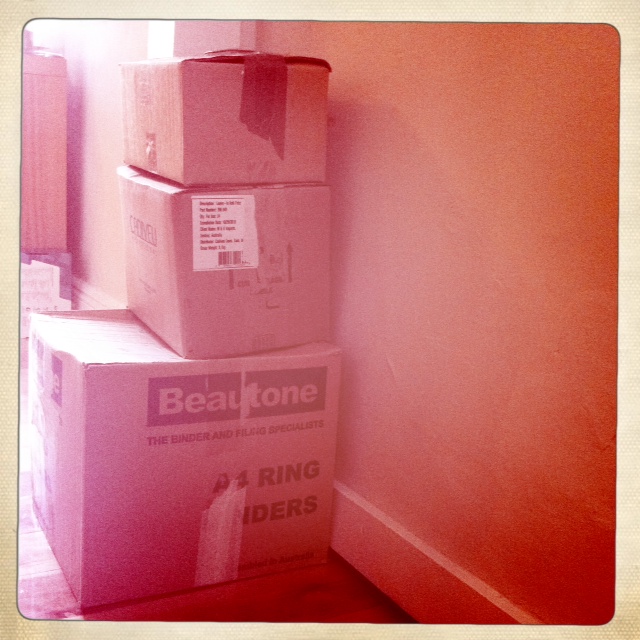
I’ve been packing this week to move house on the weekend. I’ve discovered things I forgot I owned, which I suppose is normal, but it does make me think I can probably get rid of a whole lot of stuff…

This move out of the house is happening a whole lot more quickly than the move into the house did, and so it’s been quite different psychologically (so far). I went back to read what I wrote last time I moved. This stood out.

This house had become home, these housemates like family.

So I guess we began the process of sorting, packing and moving with… well, heavy hearts. Sometime towards the middle of January, I found myself thinking about how I’d only walk this route to a yoga class (or get off the train at this station, or stare out my bedroom windows, or go for a walk in this park, or see this or that neighbour on the street) a finite number of times. And every now and then the four of us would be standing together in the kitchen talking and/or cooking, and one of us would sigh. Sentimentality became a big part of our last weeks in the house.

I’m prone to sentimentality, to brooding over things. The first sentence in the section above is true of the house I’m in now too. But this time around the rest of my housemates are staying put, and I only really found out when exactly I was going to be moving at the beginning of this week. The combination of those two things, I think, means I haven’t yet had time to brood too much. I’m sure that will come once the move has occurred. Of course, this time around I’ll be able to come back and visit my old house and housemates when and if that brooding makes me nostalgic.

At the moment, the whole thing feels a little surreal. I’m teaching all my regular classes, and trying to get other work done, and in between packing my material life into boxes. It’s odd that we feel so attached to all the stuff we accumulate. Some of my things I’ve had since I was a teenager. Some things I’ve only collected more recently, but much of that used to belong to my grandparents, and so is also imbued with sentimental value.

Every time I move, I find myself wanting to just chuck a whole lot of stuff out, but I never manage to get rid of much. It’s just stuff, but it also holds all those memories for me—I’m not sure I’d cope if I had to carry the memories around all on my own. Sentimentality gets me every time.

I’ve written here before about how intrigued I am by what constitutes ‘home’. The relationship between a person and the house, suburb and town or city they live in is such a nuanced one. It will be interesting to see how this shift in homes affects me, how my stuff in a new place changes things.

But for now, back to the packing of boxes.

The Emerging Writer: An Insider’s Guide to Your Writing Journey

At the beginning of June, an essay of mine will be published in the Emerging Writers’ Festival’s yearly publication, which this year is called The Emerging Writer: An Insider’s Guide to Your Writing Journey. Here’s the blurb from the Emerging Writers’ Festival’s website:

Every writer has to find their own way to emerge – there is no set route, no absolute path and no road that must be followed. But there is a lot we can learn from those who have travelled before us: how to get there more directly, how to bypass the road blocks, traverse the peaks and valleys, or which is the most scenic route.

The Emerging Writer is an insider’s guide full of valuable advice from fellow travellers – a resource you can keep within arm’s length, for when you need to consult that map again to help you find your way. Inside you will find information on: how to create publication opportunities, understanding your value and getting paid, why you shouldn’t write what you know, managing your digital domain… and much more! Whether you’re taking your first step, planning the next stage of your trip, or just want inspiration to keep travelling on your writing journey, this book is for you.

I’m being published alongside a wonderful list of writers, and am really looking forward to getting my hands on a copy.

~

Sort-of related: the Emerging Writers’ Festival program came out yesterday. You should check it out here. I’m heading down to Melbourne at the end of May to attend, and I can’t wait.

A Drink with LiteraryMinded

Literary blogger and dear friend of mine, Angela Meyer (aka Ms LiteraryMinded) has just brought out the first two episodes of her new online video series A Drink with….

In her own words:

A Drink with… is a literary-minded chat show. In each episode I chat, informally, with a different writer, over a drink at a Melbourne location. Over the course of the show my co-producer Mark Welker and I will feature both emerging and established writers, and writers of different forms, including criticism.

The first two episodes, with novelist Lisa Lang (co-winner of the Vogel in 2009) and poet Omar Musa (who has won both the Australian Poetry Slam and the Indian Ocean Poetry Slam), have been released simultaneously. You can view them below, on Vimeo, or on the LiteraryMinded blog.

It’s such a brilliant idea. The first two episodes are beautifully shot, and have such a warmth to them. Almost as if you were sitting in the bar/cafe with the writers. The camera takes in both Ange’s obvious rapport with her interview subjects, and all those little details you might notice about a person in close-up — hand gestures, little smiles, listening faces. I’m very much looking forward to future episodes.

A Drink with Lisa Lang from LiteraryMinded (Angela Meyer) on Vimeo.

A Drink with Omar Musa from LiteraryMinded (Angela Meyer) on Vimeo.

Writing and Life and Doris Lessing

There’s a beautiful piece by Melanie Joosten up on the Meanjin blog today about writing and how it fits (or doesn’t) into life. Joosten leans on the writing of Doris Lessing, looking for answers. Lessing, she says, “tackles that familiar feeling of inadequacy — that the artist writes out of an ‘incapacity to live’. She reminds me that writing is a way to make sense of the world and to order my thoughts.”

To my discredit, I’ve not yet read any of Lessing’s novels, but I do re-read her 1965 collection of short stories, A Man and Two Women from time to time. I’ve always been struck by the clarity of Lessing’s observations. I agree with Joosten when she writes: “I cannot think of a more electric writer, one whose words speak of things always precisely of the moment.”

But, before now, Lessing is not an author I’d have thought to look to for advice about how to fit writing into my life. Perhaps I should look to her now. Joosten’s thoughts are very familiar: “When I ask myself what kind of person I am going to be, I realise that ‘a writer’ is only part of it. If one of the ways we live our lives is to seek happiness, we have to understand what happiness means. To me, the happy life is an amalgamation of the creative life and the moral life.”

Retraining as a social worker, Joosten seems to be asking herself many of the same questions I am at the moment. Questions about how I want my life to fit together, how I want to fill my days. I realised some time ago that none of the things I currently do, I’d want to do full time. Both writing and teaching are fulfilling, but somehow more so when I’m trying to do them both, turning my life into a fairly complex puzzle. I feel like I’m just starting to get somewhere with it though, like I’ve perhaps got together all of the edge bits and a small section in the bottom right hand corner. And I’m beginning to understand now why my mum, and her mum too, love to do puzzles. Working so slowly to fill this puzzle out requires patience, and rewards that patience with a steady stream of small satisfactions.

~

If you’re interested in reading the full post by Melanie Joosten, you can find it here.

A city’s intricacy

It’s the city’s crush and heave that move you; its intricacy; its endless life.

    ~ The Hours, Michael Cunningham
    I’ve been trying for months now to articulate exactly this sentiment. I miss the open space of my country upbringing, I miss the clean air, I miss seeing the stars in the sky at night. But this, this layer upon later of human intricacy, is what I’d miss about the city were I to move to the country.

    An example: in a house around the corner from mine lives a man who practises his operatic singing in the middle of the day. Sometimes I happen to be walking past, and it never fails to make me smile—there he is, just the thickness of a wall away from me, singing beautifully.

Back to fiction?

This makes me want to write fiction again, even though it actually comes from non-fiction. Or the pseudo-fiction section of a non-fiction essay…

If the opinions upon any of these matters had been chalked on the pavement, nobody would have stooped to read them. The nonchalance of the hurrying feet would have rubbed them out in half an hour. Here came an errand-boy; here a woman with a dog on a lead. The fascination of the London street is that no two people are ever alike; each seems bound on some private affair of his own. There were the business-like, with their little bags; there were the drifters rattling sticks upon area railings; there were affable characters to whom the streets serve for club-room, hailing men in carts and giving information withouth being asked for it. Also there were funerals to which mean, thus suddenly reminded of the passing of their own bodies, lifted their hats. And then a very distinguished gentlemean came slowly down a doorstep and paused to avoid a collision with a bustling lady who had, by some means or other, acquired a splended fur coat and a bunch of Parma violets. They all seemed separate, self-absorbed, on business of their own.

    ~ Virginia Woolf, ‘A Room of One’s Own’, page 94

People are so interesting.

Hand-painted maps

I’ve been thinking, reading and writing about maps lately (the adventuring to Coogee in my last post was, in part, research related to the map work I’m doing), and I came across this video on Brain Pickings. Fascinating. I love that Jerry’s work on the map is so systematic, and yet there’s such wonder and imagination involved in its creation. It reminds me of some of the reading I’ve done on designing cities, and the idea that we should be designing incompleteness, to allow for some organic development in our urban places.

Jerry’s Map from Jerry Gretzinger on Vimeo.

(There’s also an article about Jerry’s map on The Atlantic website. And if you’re interested in more map-goodness, also check out this Brain Pickings post on the BBC series The Beauty of Maps.)