Again on agriculture (which, you might have gathered, is where much of my research is based at the moment). This is an excellent 30 minute documentary on the importance of the diversity and independent ownership of seeds.
(Via Our Food Future.)

Again on agriculture (which, you might have gathered, is where much of my research is based at the moment). This is an excellent 30 minute documentary on the importance of the diversity and independent ownership of seeds.
(Via Our Food Future.)
Given that I’m reading Wendell Berry’s arguments for appropriately supporting the people who grow our food, I was sad to read this today over at the Youth Food Movement blog:
The Australian Farm Institute released research that found only 28% of Victorian farms made enough profit to support their own families. That’s crazy!
Its even scarier when put like this: 72% of Australian family farms don’t earn enough to support the family on them.
The piece I was quoting yesterday was written in the 80s. How sad that twenty years later it’s still so appropriate an argument.
~
Read the full YFM post here.
Unfortunately, access to the full study by the Australian Farm Institute requires a paid membership, but you can read a detailed report on it here.
Yoga and writing: two things that are, pretty obviously, close to my heart. My lovely Twitter friend, Vanessa, is running a yoga and writing workshop at the SA Writers’ Centre in Adelaide in September. If I was in Adelaide, I’d be there in a heartbeat!
From the website:
Yoga has a unique way of unlocking your creativity. It guides you to connect with something greater and can help to shift the dreaded writer’s block. This workshop will include explorative yoga asana classes and meditation to help you find peace within and open that part of your mind and heart where you create from. It is ideal for people new to both writing and yoga who want to enjoy a day of yoga coupled with creative writing exercises.
If you’re interested in more details, you can find them here.
Last week I finished a masters degree that I’ve been doing on and off now for four years. It’s a degree that I’ve enjoyed immensely at times, and loathed at others, but that, overall, I’m so glad to have done.
I wasn’t sure what to expect of myself when I finished. I guess I expected some relief, and maybe some sadness. But actually what I’ve ended up with is a kind of confusion about what to do now, and about a million suggestions from within my own mind about how to manage that confusion. Since Thursday (the day of my last class), I’ve had this odd excitable (bordering on manic, actually) energy.
“Energy”, when your day job is teaching people yoga, is a troublesome word to use. When I say it, people sometimes look at me strangely, thinking, I suppose, that I might start talking to them about hippy-dippy energy healing or something. I do know (and respect) people who work in that kind of therapeutic field, but when I use that word, I’m aware of those links, but that’s not really what I mean. I’m just talking about the feeling that tells you whether you’re tired or sluggish, or likely to burn through a long To Do list in five minutes flat. And for the last few days, my energy has been the latter. Well, it would be if I could only pin it down long enough to focus on something.
Yesterday morning I half-made myself three separate breakfasts because I couldn’t focus long enough to decide what I wanted. I made plans for some exciting stuff happening later in the hear, I did some reading for some writing work I’m about to start, and i planted some new green-leafy stuff in my garden. Today I made pies for some friends for afternoon-tea-lunch, but I also made a loaf of bread and a bunch of other small things. And walked around in circles in the kitchen because I kept forgetting what I was doing. Tonight I’ve started no less than four writing projects, some small, others not so. I’ve started reading about three different books since Thursday.
As I wonder which of these various projects I’ve started will actually get off the ground, I’m reminded of this talk on the paradox of choice. Because right now I feel a little like that’s what finishing uni has left me with—too much choice (yes, I know: first world problem).
I worry too that at some point I’ll crash, because that’s usually what happens for me. In fact, I’m a little surprised it hasn’t already. What I would love to learn is how to sit still with this energy and just watch it, but I so often feel like I need to use it while it’s there. I wonder how much that feeling is dependent on the pattern of energy-burn-crash-energy-burn-crash, and if I could learn to even it out a little.
This is why I do yoga. Focus. Learning to sit still. Learning to do nothing. (Which, incidentally, is what my essay in this lovely book is about.) Or, at the very least, to be aware of what’s going on and try to work with that. I wonder if it’s something I’ll ever be good at.
A little bit late, but I thought I should complete my posts on the Emerging Writers’ Festival. On Sunday I went along to just two sessions at the Town Hall Writers’ Conference—I’m not surely brain could’ve coped with anymore. Some very vague and incomplete notes are below.
~
In a session on Digital Writing, John Weldon came out with this gem: “Having an online presence is a bit like having a gym membership. Most people get one, but then never go. To get something out of it, you have to actually go.”
In the afternoon, I went along to a session on Life Writing, in part because I write personal essays and creative non-fiction, and in part because I’m currently writing an essay about the complexities of narrating the self. Comedian and writer, Luke Ryan, and author and program director of Creative Writing at RMIT, Francesca Rendle-Short, discussed the difficulties of writing about yourself. A couple of interesting notes:
“In any family, you always have as many mothers as the are children.” (Rendle-Short)
Luke, whose writing frequently relates to his two run-ins with cancer, says writing the narrative of his illness allows him to control how people speak to him about it. Because his writing is funny, he hopes that people will stop being terrified of talking about he disease.
~
I came away from the afternoon, and indeed the weekend, with far too much to think about. It’s been awfully difficult to concentrate this week — but it’s kind of nice to know that there are new ideas and connections forming in my mind. Hopefully my vagueness hasn’t worried my yoga students too much.
Sometimes being in Melbourne makes me feel haunted, like I might run into a younger version of myself at any moment. Being here for a festival, something that is so intellectually expansive, only serves to heighten that feeling—like somehow the fact that there are new possibilities opening up in my mind might make a meeting like that possible. It’s not exactly unpleasant, but it is unsettling.
Because I feel like it’ll be some time before any of this stuff settles enough for me to make sense of it, I’m going to continue with the barely-edited-selection-of-notes format. Here’s some impressions of yesterday’s Emerging Writers’ Festival Town Hall Conference panels.
~
A selection of tips from Seven Enviable Lines
Emily Maguire: Writing full-time will not necessarily make you a better writer, & it may make you a worse one. You may begin to lose touch with the world—”I don’t believe you need to write what you know, but I do believe you need to know about what you write.”
Christy Dena: “Let others breathe on your baby.”
Ali Alizadeh: Writing is an extension of reading. Writing is always a dialogue with other writing.
Anita Sethi: Sit down, & the inspiration will come. Writing is very hard work. The inspiration is a spark, but the perspiration is so important.
Lawrence Leung: Listen to feedback, but don’t let it rule your life. If you want to write, no one can stop you except you.
A selection of notes from other panels throughout the day
In Writing on Tough Topics, Sydney Smith suggests that exposing oneself by writing about something tough is also a way of making amazing discoveries. I’m reminded of this TEDtalk on vulnerability.
In a session on Structure, Ali Cobby Eckerman says the structure of her writing is often imposed by her Indigenous cultural background. I wonder how much of the way I put stories together comes from cultural structures I’m hardly aware of.
In a session on Cross Platform writing, I am completely fascinated by the gesticular communication of Deaf writer, Asphyxia. So expressive—perhaps more so than any spoken communication can ever be. This is itself cross-platform communication, if you think of the human voice and body as media through which we tell stories.
I’m in Melbourne this weekend (well, I’ve made it a long weekend) with my housemate (my Wifey) for the Emerging Writers’ Festival. We got up early yesterday morning and flew down, both on very little sleep (excitement had kept us both up the night before maybe?), and spent the afternoon doing some writing work in a cafe recommended to us by the lovely Ms LiteraryMinded (Ange).
In the evening we ventured into the city (along with Ange) in search of a cheap and cheerful dinner, which we had along with perhaps a wee bit too much wine. As a result, we turned up at the EWF launch rather giggly. Rather then go into great and lengthy detail about the night, I thought I might just post a selection of my notes from the evening. There are plenty of gaps in these notes, and they were made in the fog of red wine and the excitement that comes with being at a festival. Here they are.
~
Arrived giggly and a little tipsy.
Familiar faces (including a little swoon at nearly literally bumping into songwriter Paul Kelly)
Tessa Waters, MC: “…wipe the creative placenta from your eyes, & just, you know, emerge.”
Tessa dancing. Us laughing. Bottom shaking. Laughing. Tears of laughter. Not that funny but can’t stop laughing. Aware that other people aren’t laughing as much as Wifey, Ange and I. Still laughing. Tassels shaking. Laughing. “Too much champagne already,” says Tessa once she’s finished her dance. Yep. I hear you.
Ruby J Murray
“Everyone of you will know what it feels like when you learn a new word, and you experience the world through this new thing.”
“We only have one word for their thousand beginnings, which is ‘acorn’, and only one word for their thousand ends, which is ‘oak’.”
Talk of loss of Indigenous languages. We miss out on a way to describe this place. “I will do what all writers should do, which is listen.”
“But in the end it’s all up to us to listen.”
Think about the ground beneath our feet, and what it means to the Indigenous leaders for us to be here.
Lisa Dempster introduces the festival.
Wishing suddenly that I could go to the launch of the Emerging Writer at the National Gallery (there’s an essay of mine in this beautiful book).
Aware suddenly that lots of garlic and onion at dinner was probably not a good idea if I want to actually talk to anyone after the official stuff is over.
Monash University Undergraduate Prize for Writing announced.
Monash winner—Michelle Li
Overall winner—Tully Hansen
International guest—Anita Sethi
“Each story itself is a journey” from the mind of the writer, through the pen or computer, to the reader.
The world is teeming with stories.
“History and fiction blur, and the imagination fills in the gap.”
Fiona McGregor, a call to arms:
Suspend the adjectives—get rid of the emerging, or at least think about what it means.
Maybe get rid of the adjective and return to the noun—writer, writing.
“We still have this urge for this gathering in the flesh.”
“Festivals are about the performance aspect.”
“Writing still necessitates retreat.”
Thinking space needed.
George Orwell—Why I Write
The four things: the best writers manage to keep all four in the air.
Ego, aesthetic, history, political purpose.
“As solitary as this work is, it has to be plugged in to the here & now.”
Writing is a job. If you want to survive, you have to set alarm and get up. You have to deal with days where you do nothing—worse, where you do harm.
“What are you doing it for? Because you’re mad.”
But then some days it works—”and when you share it, it chimes.”
Cherish the lonely space, the space of discomfort.
A reminder that solitude is scary, but wonderful. Cherish it.
Tessa Waters, introducing Omar Musa, talks about hip hop and dancing. On krumping: imagine yourself a very short person in a very big boat and you’re just rowing.
Omar Musa
Performed:
My Generation
Fireflies
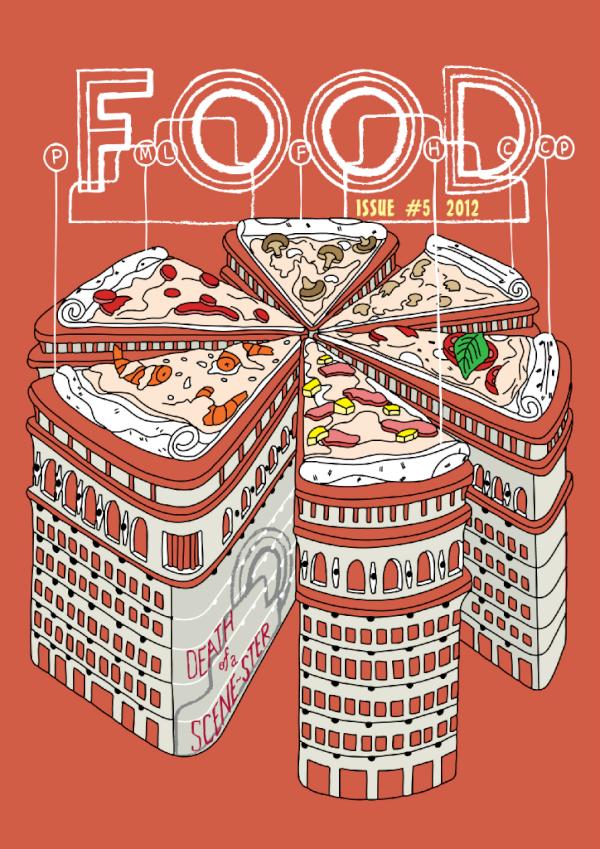 Melbourne ‘zournal’, Death of a Scenester is launching its fifth issue, Food, next Saturday night in Abbotsford in Melbourne. Some words of mine on growing my own food and the subtleties of vegetarianism will appear in this issue.
Unfortunately I can’t make it to the launch, but if you’re in Melbourne, do try and get along! I’m really looking forward to getting my hands on a copy of this issue.
At the beginning of June, an essay of mine will be published in the Emerging Writers’ Festival’s yearly publication, which this year is called The Emerging Writer: An Insider’s Guide to Your Writing Journey. Here’s the blurb from the Emerging Writers’ Festival’s website:
Every writer has to find their own way to emerge – there is no set route, no absolute path and no road that must be followed. But there is a lot we can learn from those who have travelled before us: how to get there more directly, how to bypass the road blocks, traverse the peaks and valleys, or which is the most scenic route.
The Emerging Writer is an insider’s guide full of valuable advice from fellow travellers – a resource you can keep within arm’s length, for when you need to consult that map again to help you find your way. Inside you will find information on: how to create publication opportunities, understanding your value and getting paid, why you shouldn’t write what you know, managing your digital domain… and much more! Whether you’re taking your first step, planning the next stage of your trip, or just want inspiration to keep travelling on your writing journey, this book is for you.

I’m being published alongside a wonderful list of writers, and am really looking forward to getting my hands on a copy.
~
Sort-of related: the Emerging Writers’ Festival program came out yesterday. You should check it out here. I’m heading down to Melbourne at the end of May to attend, and I can’t wait.
Literary blogger and dear friend of mine, Angela Meyer (aka Ms LiteraryMinded) has just brought out the first two episodes of her new online video series A Drink with….
In her own words:
A Drink with… is a literary-minded chat show. In each episode I chat, informally, with a different writer, over a drink at a Melbourne location. Over the course of the show my co-producer Mark Welker and I will feature both emerging and established writers, and writers of different forms, including criticism.
The first two episodes, with novelist Lisa Lang (co-winner of the Vogel in 2009) and poet Omar Musa (who has won both the Australian Poetry Slam and the Indian Ocean Poetry Slam), have been released simultaneously. You can view them below, on Vimeo, or on the LiteraryMinded blog.
It’s such a brilliant idea. The first two episodes are beautifully shot, and have such a warmth to them. Almost as if you were sitting in the bar/cafe with the writers. The camera takes in both Ange’s obvious rapport with her interview subjects, and all those little details you might notice about a person in close-up — hand gestures, little smiles, listening faces. I’m very much looking forward to future episodes.
A Drink with Lisa Lang from LiteraryMinded (Angela Meyer) on Vimeo.
A Drink with Omar Musa from LiteraryMinded (Angela Meyer) on Vimeo.
 avocado and lemon