Again on agriculture (which, you might have gathered, is where much of my research is based at the moment). This is an excellent 30 minute documentary on the importance of the diversity and independent ownership of seeds.
(Via Our Food Future.)

Again on agriculture (which, you might have gathered, is where much of my research is based at the moment). This is an excellent 30 minute documentary on the importance of the diversity and independent ownership of seeds.
(Via Our Food Future.)
Given that I’m reading Wendell Berry’s arguments for appropriately supporting the people who grow our food, I was sad to read this today over at the Youth Food Movement blog:
The Australian Farm Institute released research that found only 28% of Victorian farms made enough profit to support their own families. That’s crazy!
Its even scarier when put like this: 72% of Australian family farms don’t earn enough to support the family on them.
The piece I was quoting yesterday was written in the 80s. How sad that twenty years later it’s still so appropriate an argument.
~
Read the full YFM post here.
Unfortunately, access to the full study by the Australian Farm Institute requires a paid membership, but you can read a detailed report on it here.
I couldn’t resist another quote from Wendell Berry:
“In nature death and decay are as necessary—are, one might almost say, as lively—as life; and so nothing is wasted. There really is no such thing, then, as natural production; in nature there is only reproduction.” (from Agricultural Solutions for Agricultural Problems, 1978)
Indeed.
~
This essay is from a collection of Berry’s work, entitled Bringing it to the Table: On Farming and Food, which is available on Amazon here. (Full disclosure: I’ve got an affiliate account with them, which means I’ll make a small commission if you purchase the book through that link.)
I’ve begun reading Wendell Berry, as part of some research that I’m doing, and finding, as Michael Pollan says of him, that his writing makes so clear things that should already be self-evident, and it does so in a way that is “always patient and logical, as plumb and square and scrupulous, as well-planed woodwork”. I could share about a million quotes that demonstrate this, but this one is my favourite so far. He’s writing about the stupidity of factory-farming animals, but the ideas here could apply to all sorts of areas:
“If the people in our state and national governments undertook to evaluate economic enterprises by the standards of long-term economics, they would have to employ their minds in actual thinking. For many of them, this would be a shattering experience, something altogether new, but it would also cause them to learn things and do things that would improve the lives of their constituents.” (from Stupidity in Concentration, 2002)
What I love about Berry’s writing is that he doesn’t forget farmers in his talk of the stupidity of the overall system. While its not universally the case, so much of the criticism of our food system neglects to mention farmers — which, unconsciously I’m sure, serves to lump them in as part of the problem. In fact that problem is the overall business model — which, for the most part is something that’s as much imposed on farmers as it is on the people who eventually eat the food it produces.
“It ought to be obvious that in order to have sustainable agriculture, you have got to make sustainable the lives and livelihoods of the people who do the work. The land cannot thrive if the people who are its users and caretakers do not thrive.” (from Stupidity in Concentration, 2002)
Definitely something worth remembering.
~
This essay is from a collection of Berry’s work, entitled Bringing it to the Table: On Farming and Food, which is available on Amazon here. (Full disclosure: I’ve got an affiliate account with them, which means I’ll make a small commission if you purchase the book through that link.)
Last week I finished a masters degree that I’ve been doing on and off now for four years. It’s a degree that I’ve enjoyed immensely at times, and loathed at others, but that, overall, I’m so glad to have done.
I wasn’t sure what to expect of myself when I finished. I guess I expected some relief, and maybe some sadness. But actually what I’ve ended up with is a kind of confusion about what to do now, and about a million suggestions from within my own mind about how to manage that confusion. Since Thursday (the day of my last class), I’ve had this odd excitable (bordering on manic, actually) energy.
“Energy”, when your day job is teaching people yoga, is a troublesome word to use. When I say it, people sometimes look at me strangely, thinking, I suppose, that I might start talking to them about hippy-dippy energy healing or something. I do know (and respect) people who work in that kind of therapeutic field, but when I use that word, I’m aware of those links, but that’s not really what I mean. I’m just talking about the feeling that tells you whether you’re tired or sluggish, or likely to burn through a long To Do list in five minutes flat. And for the last few days, my energy has been the latter. Well, it would be if I could only pin it down long enough to focus on something.
Yesterday morning I half-made myself three separate breakfasts because I couldn’t focus long enough to decide what I wanted. I made plans for some exciting stuff happening later in the hear, I did some reading for some writing work I’m about to start, and i planted some new green-leafy stuff in my garden. Today I made pies for some friends for afternoon-tea-lunch, but I also made a loaf of bread and a bunch of other small things. And walked around in circles in the kitchen because I kept forgetting what I was doing. Tonight I’ve started no less than four writing projects, some small, others not so. I’ve started reading about three different books since Thursday.
As I wonder which of these various projects I’ve started will actually get off the ground, I’m reminded of this talk on the paradox of choice. Because right now I feel a little like that’s what finishing uni has left me with—too much choice (yes, I know: first world problem).
I worry too that at some point I’ll crash, because that’s usually what happens for me. In fact, I’m a little surprised it hasn’t already. What I would love to learn is how to sit still with this energy and just watch it, but I so often feel like I need to use it while it’s there. I wonder how much that feeling is dependent on the pattern of energy-burn-crash-energy-burn-crash, and if I could learn to even it out a little.
This is why I do yoga. Focus. Learning to sit still. Learning to do nothing. (Which, incidentally, is what my essay in this lovely book is about.) Or, at the very least, to be aware of what’s going on and try to work with that. I wonder if it’s something I’ll ever be good at.
Last week was an odd one. A few weeks ago, I drafted a post about how I’d realised that rhythm was really important to me—my work hours are different every day with teaching, and often from week to week with writing, so it’s almost impossible to find something as structured as a routine. The word rhythm seems far more appropriate.
Moving house, of course, changes that rhythm in small ways and in larger ways. The route I take to get to all my classes is completely different, and often means I need to leave the house at a different time. The places I often found myself writing—whether at home or out and about—are now much further away. It’s both an exciting and disconcerting experience to have to find a new rhythm to settle into.
I realised a couple of days ago that one of the ways I settle into new places these days is to cook. For me, the kitchen is such an important part of how a house functions. Getting to know a new kitchen by cooking in it is a wonderfully settling activity for me.
I spent last week cooking familiar things in the so far unfamiliar kitchen, and it really helped me settle into the idea that this place is home. On Saturday morning my new housemate and I went to the Eveleigh Farmers’ Market and bought some produce to add to the box of home-grown stuff her parents (who stayed with us a few nights last week) brought us from their property, and in the afternoon I attempted to cook a few new things. Somehow, cooking something new in a new place fits with the idea of a new rhythm. There’s something in the potential for this particular new dish to become an old faithful, like the new routes to work will eventually become so familiar.
The weekend’s new dish was baked beans in the slow cooker my Mum gave me. For me (and, incidentally, for my new housemate), baked beans are one of those comfort foods—along with things like porridge, they’re the food I’ll eat when I can’t be bothered cooking, and I need something familiar, tasty and warm. So the combination of familiarity with the new experience of making them from scratch (rather than opening a can) seems an appropriate meeting of experiences.
They turned out pretty well, for a first try. We had them with toast and an egg for dinner last night. Exactly the kind of comfort we both needed after what proved a very busy week.
(Unfortunately, in my haste to eat the beans, I forgot to take a picture of the finished product. Next time.)
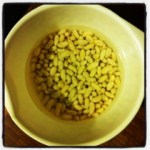

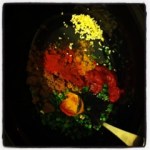
Recipe
(The original recipe I found here, and added a few things — next time I plan to also add some kind of herb, possibly rosemary, right before serving.)
200g cannellini beans (dry weight)
1 large tin chopped tomatoes
1/2 onion, finely chopped
1 clove garlic, finely chopped
2 tbsp dark muscovado sugar
1 tsp vegetable stock powder
1 tsp smoked paprika
1/2 tsp mustard powder
1/2 tsp marmite/promite/vegemite
1 good slug of Worcestershire sauce
1 tsp chilli powder or flakes
salt and pepper
Method
Soak the beans overnight.
Boil them for 10 minutes before using.
Add all the ingredients to the slow-cooker. Stir and mix through thoroughly.
Set the slow-cooker to low.
Cook for at least 6 hours (I put too much water in, so I ended up having to cook mine for about 12 hours).
Serves 2 as supper.
Serves 4 as part of a cooked breakfast.
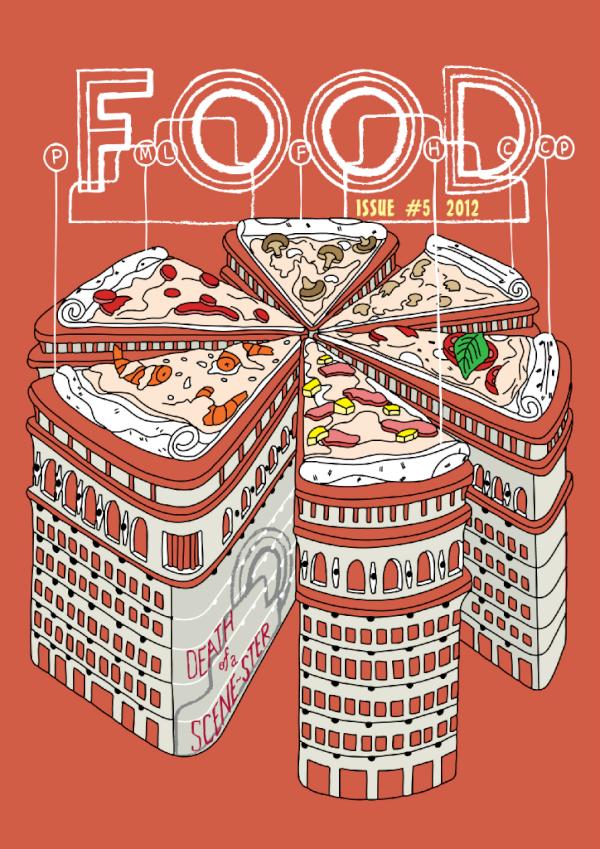 Melbourne ‘zournal’, Death of a Scenester is launching its fifth issue, Food, next Saturday night in Abbotsford in Melbourne. Some words of mine on growing my own food and the subtleties of vegetarianism will appear in this issue.
Unfortunately I can’t make it to the launch, but if you’re in Melbourne, do try and get along! I’m really looking forward to getting my hands on a copy of this issue.
As you may have gathered, I’ve been writing about food. And I’ve written a big, fat, juicy essay for The Lifted Brow’s food issue.
Read all about it here. (And order yourself a copy of this brilliant journal — you know you want to.)
I’m afraid there’s going to be a fair bit more of this nepotism stuff happening around here, because I’ve got a keen interest in this project my brother’s working on. His latest Sustainable Marketing Project post is about the Value Chain, and how that relates to sustainability and the carbon footprint of a product.
If you’re interested, read more here.
~
PS. Posts about Melbourne and the Melbourne Writers’ Festival are coming, I promise.
My brother Tom is nearly finished a Captain Planet degree — that is, a Bachelor of Interdisciplinary Studies in Sustainability. As part of the degree, he’s pulling together what’s called a Sustainable Marketing Project, with a particular focus on a post- or low-carbon future. Because he’s just as much of a food nut (pun intended) as I am, he’ll be looking specifically at food.
It’s interesting, I think, that the two of us have both come to be writing and thinking about food, and that we’ve come at it from such different educational backgrounds (at least on a tertiary level). A large part of Tom’s degree has been necessarily science-based; I, however, have not studied any science since the hopefully-named ‘Physics is Fun’ semester I did at the end of year ten. My background is in arts and communications.
And I guess that’s why I’m particularly interested in this project. I think it’s safe to say that I’m obsessed with food; eating it, yes, but also thinking about where it comes from and how it gets to be on my plate. These questions are sometimes questions about process, and they’re sometimes questions about ethics. Tom’s project is attempting to cover both: how carbon is embedded in our food, and how to calculate that, but also why knowing that is important or relevant. This project is about information, but it’s also about telling a story.
The marketing element to this project, I think, is what makes it so interesting. Information about this thing we call ‘sustainability’ (what does that word even mean anymore?) is so often tinged with negativity, or completely overwhelming because of its sheer volume. It’s something I certainly struggle with in my non-fiction writing on food. The story-telling element is so important to get right, or you lose your reader (or viewer or listener) after about half a second.
Have a look at Tom’s first few posts on this project here. He’s just getting started, and I’m sure he’d really appreciate some feedback. I can’t wait to see what he comes up with.
 avocado and lemon